

Field Sales Software for Malaysian SMEs: Stop Guessing, Start Tracking
Malaysia’s SME economy is increasingly powered by field teams: sales reps, merchandisers, canvassers, and account managers. Yet many of these businesses still rely on spreadsheets, WhatsApp updates, and end-of-day reports. Field sales software is emerging as a critical layer of infrastructure that replaces guesswork with real-time visibility, helping Malaysian SMEs protect margins and grow more predictably.
Why Field Sales Software Now Matters More Than Ever
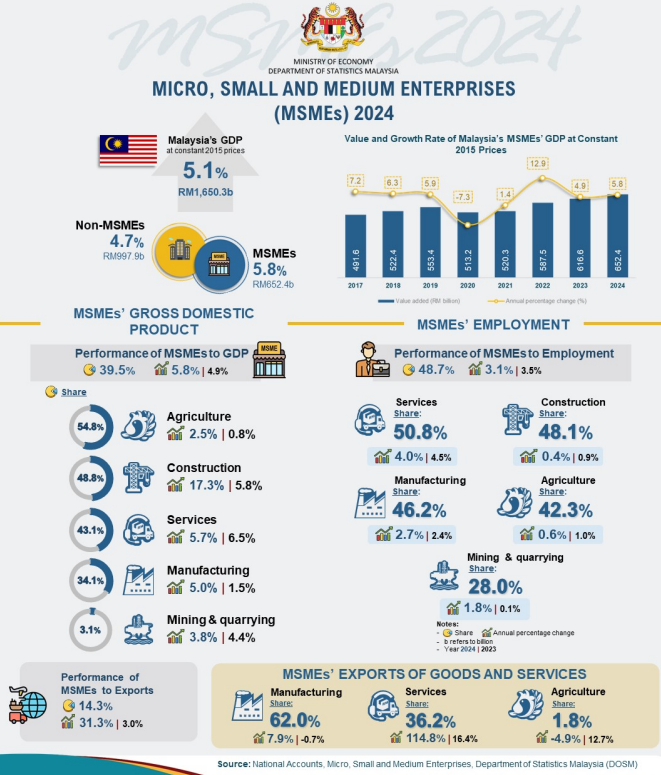
In Malaysia, 96.1% of the country’s 1,086,386 business establishments are micro, small, and medium enterprises, according to the Department of Statistics Malaysia. They contributed RM652.4 billion in value added in 2024—39.5% of Malaysia’s GDP—and recorded 5.8% growth, outpacing overall GDP growth. The enterprises also employ 8.10 million people, nearly half of total national employment.
A large share of this activity sits in services, wholesale and retail trade, and distribution—sectors that depend heavily on field sales teams visiting outlets, modern trade, and business customers daily. When field activity is tracked poorly, it directly hits revenue, working capital, and customer relationships.
That is why field sales software for Malaysian SMEs is no longer an optional tool, but a driver of competitiveness.
Also read: Top Sales Management Software for Indonesian Businesses
The Digital Gap: SMEs Are Online, But Field Operations Are Still Manual

Research by SME Corp Malaysia and Khazanah Research Institute shows that while SMEs are increasingly using computers, the internet, and social media, most have barely scratched the surface of using software to improve core business processes.
The research highlights several structural gaps:
- Persistent reliance on computerisation rather than full digitalisation
- Digital adoption focused on front-end tools instead of core systems—only about 44% use cloud computing and 54% use data analytics
- Ongoing implementation barriers for customer relationship management (CRM) and operational software
The result: many Malaysian SMEs run modern marketing (e.g., social media, marketplaces) on top of very traditional field sales execution—clipboards, phone calls, and unstructured messaging. That operational gap is precisely what is accelerating demand for field force automation in Malaysia.
Also read: 9 Current Trends in Indonesia’s Food & Beverage Industry
Field Force Automation Is Taking Off in Malaysia

Industry analyses indicate that the Malaysian field force automation (FFA) market is expanding as organisations seek to optimise field operations, reduce manual errors, and support increasingly mobile workforces.
A market research firm projects the Malaysian field force automation market growing from around USD 8.3 billion in 2025 to USD 17.6 billion by 2031, at a CAGR above 13%. This growth is driven by demand for real‑time decision-making, mobile apps, and cloud-based dispatching and reporting.
Vendors and enterprise case studies across Malaysia consistently report the same drivers:
- Need to track field activities and visits in real time
- Desire to replace paper forms and spreadsheets with mobile apps
- Pressure to improve service levels and sales execution while controlling costs
At the same time, mobile CRM and sales platforms in Asia-Pacific are increasingly designed mobile‑first, giving field teams full access to accounts, opportunities, and reporting from their phones. Studies show that teams using mobile CRM for field sales teams tend to report higher productivity, faster response times, and improved conversion rates.
For Malaysian SMEs, this isn’t just a big-company trend. It is a chance to leapfrog directly from manual reporting to automated sales performance tracking tools that deliver enterprise-grade visibility at SME-friendly costs.
Also read: Why Foreign Companies in Indonesia Struggle to Hire Top Locals
What Exactly Is Field Sales Software?

In simple terms, field sales software is a combination of mobile apps and cloud dashboards that allow businesses to manage everything their sales reps do outside the office. At its core, it typically includes:
- A mobile app for field reps to check in, log visits, record orders, and capture notes
- A web dashboard for managers to see where reps are, what they’re doing, and what revenue or activities are happening
- Databases for customers, outlets, products, and sales pipelines
- Reporting and analytics for management
Modern solutions add GPS tracking for sales reps, photo or document capture, e‑signature support, and integrations with CRM. In practice, this turns every visit into structured data instead of a vague “I’ve already visited, boss” message.
Also read: Tapping into Indonesia’s Special Economic Zones Advantage
From Guessing to Knowing: Pain Points Field Sales Software Solves

For many Malaysian SMEs, the field sales process still looks like this on a typical day:
- Reps check in via WhatsApp or phone calls without real-time tracking
- Orders are written on paper or basic forms and retyped later
- Sales managers only discover issues at month-end
Field sales tools and sales visit monitoring software directly address these pain points:
Lack of visibility
Without location or time stamps, managers cannot confirm whether visits actually occurred or how long reps spent on-site. GPS-based tools and digital check‑ins provide objective visit data.
Slow, error-prone reporting
Re-keying orders and visit notes from paper into spreadsheets introduces errors and delays. Automation enables real-time sales reporting and reduces duplicated work.
Missed opportunities and weak coverage
Without clear outlet or territory planning, some high-potential customers get too few visits, while low-value stops consume time. Software-supported client visit tracking helps rebalance coverage and focus.
No single source of customer truth
Customer data is scattered between personal phones, notebooks, and individual Excel files. Integrated customer relationship management software consolidates history, contacts, and visit outcomes in one place.
Also read: A Foreign Business Guide to Indonesia’s Product Certification
Choosing the Right Field Sales Software for Malaysian SMEs

When evaluating field sales software for Malaysian SMEs, look for capabilities that specifically support a mobile, distributed workforce and multi‑channel customers. Key features include:
1. Mobile CRM and Customer Database
An effective system should give every rep on-the-go access to accounts, contact details, visit history, tasks, and open deals via mobile CRM for field sales teams. This reduces pre‑meeting prep time and ensures no important detail is lost between visits.
2. GPS Check‑ins and Remote Activity Tracking
Tools for remote sales team management should include GPS-logged check-ins, geo-fenced locations, and the ability to attach photos, signatures, and documents from the field. This helps verify presence, standardise visit proof, and supports compliance with visit plans or SLAs.
3. Visit Planning and Territory Management
For teams covering large territories across Peninsular Malaysia, Sabah, and Sarawak, client visit planning can significantly cut travel time and improve outlet coverage. Systems that help reps prioritise outlets, plan daily runs, and visualise coverage on maps can quickly pay for themselves in fuel and time savings.
4. Order Capture and On-Site Transactions
Many field teams still collect orders manually. Field sales applications can log orders directly in the app, often integrated with product catalogues and pricing rules. This ensures instant visibility of the pipeline and reduces order-entry errors.
5. Dashboards and Real-Time Reporting
Sales leaders need to see actual performance, not anecdotes. Modern sales performance tracking tools display daily visits, hit rates, new accounts, order values, and performance at rep, team, and territory levels. Real‑time dashboards allow managers to intervene early when activity or conversion drops.
6. Offline-Friendly and Cloud-Based
Given connectivity challenges in some rural or semi‑rural areas, software should allow reps to work offline and sync later. Cloud hosting also reduces the burden on SMEs, which often lack in‑house IT, and aligns with Malaysia’s push for cloud adoption among SMEs.
Also read: Top 70 FMCG Companies in Indonesia 2025
How Field Sales Software Delivers ROI for Malaysian SMEs

SME leaders often worry that field sales tools and CRM are too big or too expensive for small teams. However, the economics are shifting:
- Asia-Pacific CRM vendors increasingly offer modular, cloud-based solutions with subscription pricing that lowers upfront costs for SMEs.
- Case studies from telecom and enterprise users in Malaysia show that mobile CRM and field sales systems improve opportunity visibility and pipeline accuracy, while freeing reps from excessive reporting—allowing reps to get back on the road faster.
- International data suggests that sales teams using mobile CRM achieve materially higher quota attainment and shorter sales cycles, driven by faster follow-up, better data, and more structured workflows.
For Malaysian SMEs, even modest improvements can more than cover the monthly cost of software. One extra productive visit per rep per day or a small reduction in no-show visits is often enough to justify the investment.
Also read: The Expanding Middle Class in Indonesia: 5 Fast-Growing Cities
Hadirr: A Field Sales Platform for Malaysian SMEs

Hadirr offers an integrated suite that connects employee attendance, field activity tracking, and mobile CRM under one ecosystem. The app is designed specifically for mobile and distributed teams. Based on Hadirr’s own feature set, here is how it maps to typical Malaysian SME field sales needs:
1. Remote Attendance and GPS Presence Tracking
Through its mobile attendance feature, Hadirr lets employees clock in and out from approved locations using smartphones, with GPS-based location detection. The manager can see where attendance is recorded in real time. The system supports detailed location records on an admin dashboard and uses automatic face recognition validation to reduce buddy punching and fraud.
Attendance data and recaps can be downloaded from the portal, providing a secure, long-term archive of presence records. This directly supports remote sales team management, especially for reps who rarely visit the office.
2. Monitoring Client Visits and Field Activities
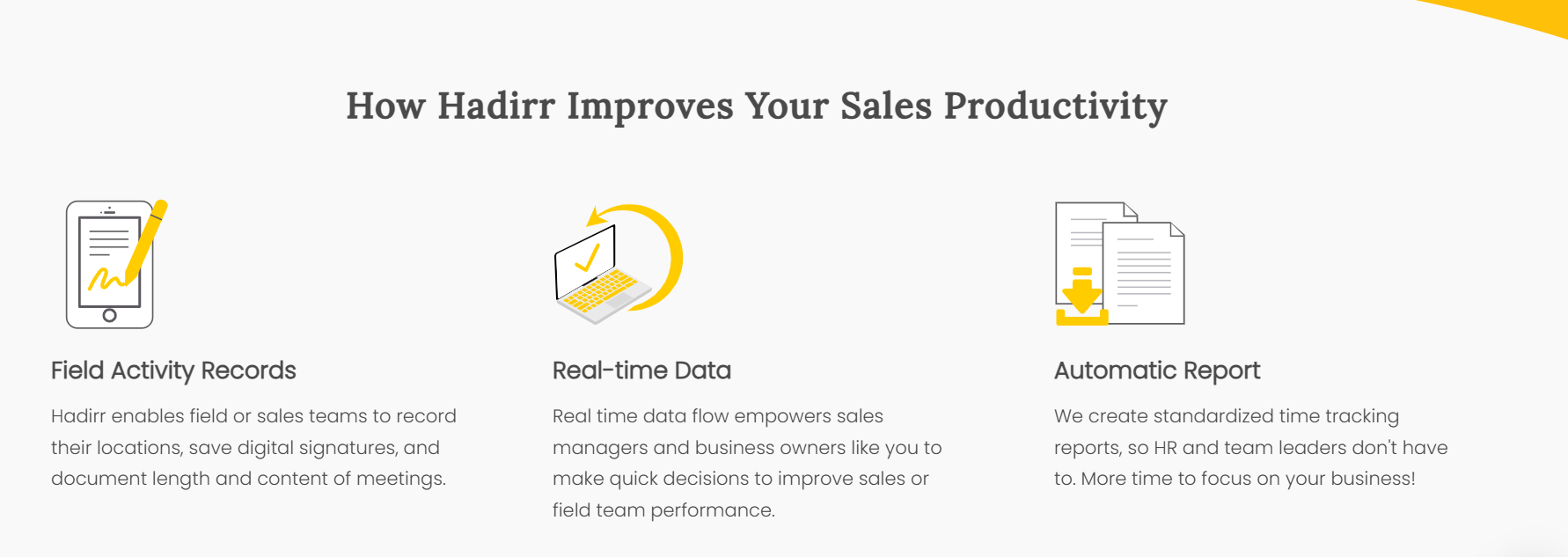
The monitoring sales module records field activities by capturing the GPS location of each visit, digital signatures, and related meeting documents. Sales canvassing and client visits are visible in real time so supervisors can monitor which outlets or customers have been visited and how often.
Managers no longer need manual visit logs or ad‑hoc reports; visit data is automatically stored in the admin portal and can be exported in one click. This effectively functions as sales visit monitoring software tailored for field teams.
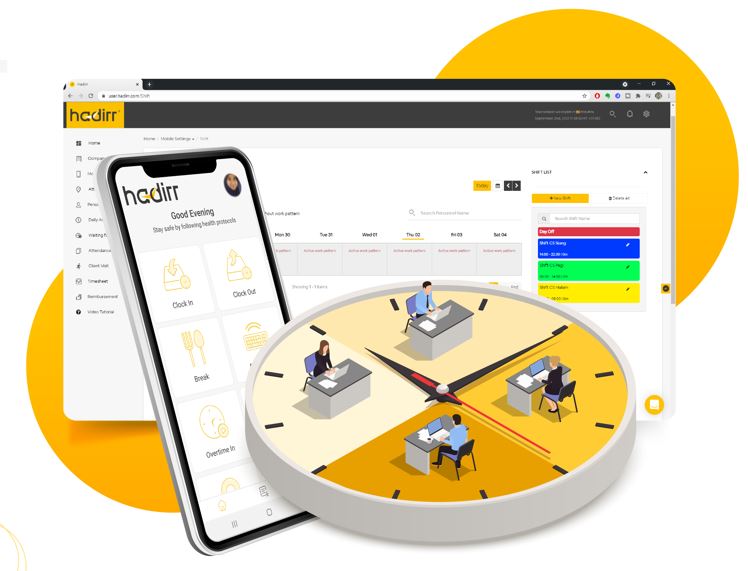
3. Mobile CRM with Hadirr Sales
Hadirr Sales is Hadirr’s dedicated CRM for field teams—positioned as a practical customer relationship management software to help businesses document sales pipelines, sales activities, and customer data in one place. The platform:
- Records customer information and sales activities, allowing managers to evaluate sales performance and adjust strategies.
- Helps structure pipeline stages, ensuring that opportunities and follow-ups do not “fall through the cracks”
- Enables managers to monitor sales activities and mobility anytime, supporting data-driven decisions
- Automatically generates sales reports and recaps of activity and target achievement, reducing manual reporting burden for sales managers.
Hadirr emphasises that this approach makes sales teams more productive and gives them more time to sell.
4. User-friendly and Scalable
As a Software as a Service (SaaS) platform, Hadirr offers:
- Ease of use: Reps will adopt the app with minimal training; otherwise utilisation will be low.
- Local relevance: Support for Bahasa interfaces, local address formats, and use cases such as route-to-outlet tracking and B2B customer visits is critical.
- Integration potential: Connect the system with HR, payroll, or finance platforms to align attendance, sales, and incentives.
- Scalability and pricing: Modular pricing that allows you to start small and add seats as your team grows—this makes it easier for SMEs rather than committing to heavyweight systems from day one.
- Compliance and data security: Cloud hosting with appropriate data protection and access controls.
Adopting field sales software is one of the fastest ways for Malaysian SMEs to close the digital gap between being merely online and truly data-driven in the field. By combining mobile attendance, GPS tracking for sales reps, live visit monitoring, and integrated CRM, Hadirr allows you to manage your field force with clarity instead of assumptions.
With Hadirr, you can finally stop guessing—and start tracking every visit, every interaction, and every deal. Sign up for a free trial now and take control of your field sales performance.